speed

ads text

Thursday, September 17, 2009


Mehandi


Mehendi, a common shrub is known to have been in use in all parts of the world since time immemorial. The traditional way of painting hand and feet with mehendi is still popular especially among brides
.
Decorating the bride's hand and feet with the application of henna or mehendi is symbolic of the auspicious occasion. Besides decorating
the hands and feet it is a popular dye to colour hair. It is also used as a home remedy for various minor ailments.

In North India, application of mehendi is a common custom. For them this is an auspicious day before the wedding.
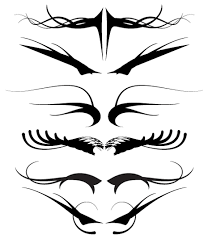
The application of mehendi is an art that is fascinating and exciting . A combination of geometrical and floral patterns are used in this decorative art.

Arabesque Designs


Indian woman are very fond of ornaments. Indian ornaments, have a variety of design and style, both traditional and modern. Each area in India has a particular style of design which is quite distinct from the others. Some of them are traditional symbols. Small and simple ornaments are used as casual wear. Heavy ornaments are used for occasions.


Tuesday, July 28, 2009

Wednesday, April 8, 2009

INDIAN ORNAMENTS

INDIAN ORNAMENTS

Indian woman are very fond of ornaments. Indian ornaments, have a variety of design and style, both traditional and modern. Each area in India has a particular style of design which is quite distinct from the others. Some of them are traditional symbols. Small and simple ornaments are used as casual wear. Heavy ornaments are used for occasions.

NOSE RINGS: It is a traditional custom for Hindu married women to wear a stud or a nose ring. Women pierce their nose either on one side or on both sides. Gold or silver studs embedded with stones of different sizes and shapes are worn. Small rings instead of studs are also used. The nose ring is considered as a symbol of marriage. Nowadays it is also worn by unmarried girls.

EAR RINGS: It is a common custom among Indians, to pierce the ears of a baby girl few months after her birth. Women wear different types of studs and hangings. These days women pierce their ears on the lobe and ornament themselves very attractively. On the occasion of marriage, very big hangings are used by brides. Ear rings of various metals like gold, silver, white and black metal are used. A thin chain attached to the ear studs with the other end pinned to the hair is called 'Maatty'.

There are few other ornaments used by women occasionally. On the wedding day, apart from the usual jewels, a big golden waist chain (Odyanam) is worn. It is worn around the waist and at times only on the left waist. It keeps the sari intact besides being an ornament. A thin chain worn on the center part of the head with a drop in front is called 'Chutti'.

An ornament called 'Vangi' is worn on both hands above the elbow. These ornaments are also used by dancers during performances.

BANGLES

India has a large range of arm ornaments. Bangles are popular among women. It is made of gold, silver, glass and many other materials. In some parts of India, women wear glass bangles of different colours which match their dress. Jaipur, in Rajasthan is a big centre for lac bangles. They are worn on uspicious occasions as a sign of good omen. A pair of shell and red coral bangles are worn by Bengali women as a symbol of marriage.

TOE RING

Toe rings are small rings worn on the toes. Wearing toe rings is a custom among some Hindu communities. It is usually made of silver. During the wedding ceremony the bridegroom put the toe ring on the brides toes. In North India toe rings are as important as a 'thali' (symbol of marriage). But nowadays it has become a fashion and is worn even by women of other communities.

Tuesday, April 7, 2009

STONES

Precious and Semiprecious Stones

Pearl (Vycranth): Represents the Moon. Believed to bring mental peace, economic prosperity, higher education and enhanced family status, its use during the period of its moon brings favours. The Pearl is also used to heal eye-related illnesses, any mental disorders and to assist good location. Worn on the ring finger. Ideal time to commence wearing it would be an hour of sunrise on a Monday.
Coral (Pavizham): Represents the planet Mars. Worn on the ring finger. Supposed to be the most favorable when Mars is prominent in one's life. Coral is widely used to enhance professional creativity, aid in the gaining of land and property, and to ensure a long married life. Believed to heal blood related diseases, the best time to start wearing it would be a Tuesday.
Emerald (Marathakam): Represents Mercury. Said to bring prosperity in education, banking and research. Emeralds are believed to be lucky for teachers, journalists and computer professionals. Believed to heal diseases related to the nervous system. Begin wearing it on a Wednesday, an hour after sunrise. Worn on the small finger.
Yellow Sapphire (Pushyarag): Represents the Jupiter. Brings luck and blessing from God. It is effective during the period of Jupiter in your life. The stone is believed to bless you with offspring, promotions, administrative powers and interest in religious matters. Start wearing it from a Thursday, an hour of sunrise, worn on the index finger.
Diamond (Heeraka): Represents the planet Venus. Favorable in matters of the heart, timely marriage and enhancement of beauty. Worn on the ring finger. Within an hour of sunrise on a Friday.
Blue Sapphire (Neela): Represents the Saturn. Using it brings luck and prosperity. Mainly to do away with rheumatism and lung diseases, the blue Sapphire is believed to help people engaged in meditation and yoga. Worn on the middle finger. Within an hour after sunrise on a Saturday.
Hessonite (Gomedha): Represents Rahu and hence brings luck during its rule in your life. Favours people who wish to be employed overseas and heals illnesses related to the intestine, skin and veins. The most auspicious time for commencing the use of this stone within an hour of sunrise on Saturday. Worn on the ring finger.
Cat's eye (Vydoorya): Brings favours during the period of Kethu. Believed that the use of Cat's eye with help to avoid miscarriage, allergies, heal urinary disorders allergies and grant educational progress. Worn on the ring finger set in a gold ring. Begin wearing it on a Tuesday within an hour of sunrise.

ORNAMENTS NEWS

Diamond Ornaments

Diamonds have become a part of daily wear for the upper middle class of Kerala. Diamonds are being adventurously matched with metals like white gold and platinum for a chic, contemporary look. There are ever-favourite baguettes, marquis, classical white diamonds and equally fashionable black, blue and brown diamonds.

Ornaments with precious and semi-precious stones move very slowly in the market. Except for diamonds, there is no resale value for the other precious stones. Delicate ornaments as well as diamonds are mostly purchased by the rich. While the middle class buyers who comprise the majority of customers in a middle and small jewellers' shop do not opt for the very intricate designs as they are costlier and one loses much in its exchange. Another main reason being its chance of breaking faster on frequent use.

Traditional Ornaments

Traditional ornaments continue to influence the gold designs and patterns like the Kashimala, Palakka, Nagapadom and Thalikoottam remain an evergreen influence. Every household boasts of owning at least one of them. But it comprises about 5% in case of the daily business only as gold remains a main feature in the Keralite's life.

Foreign and domestic tourists buy gold from Kerala attracted by the variety of special traditional designs mostly the kashimala and jhumki which are very popular.

Modern Ornaments

Gold never goes out of fashion, it is only remoulded to suit the look of times. For today's young women of Kerala the golden statement is one that is combined with other stones. Also combinations of platinum and white gold are very popular. The trend can be attributed to international influence.

Also there is a 5% market for Maharastrian (black beads), Andhra and Bengali styles. Singapore designs are popular among the foreign patterns. With their delicate designs, the Singaporean patterns cost higher by 15-20% and hence find buyers mainly in Ernakulam.

Diamond is no longer nature’s hardest material

London: Diamond will always be a woman’s best friend but the gemstone is no longer the world’s hardest material, according to scientists.

Instead, a rare natural substance, called lonsdaleite, which is made from carbon atoms just like diamond, has emerged as 58 per cent harder than the gemstone, according to a report in the New Scientist.

An international team, led by Zicheng Pan at Shanghai Jiao Tong University, simulated how atoms in two substances believed to have promise as very hard materials would respond to the stress of a finely tipped probe pushing down on them.

The simulation revealed that the first one, wurtzite boron nitride, withstood 18 per cent more stress than diamond, while the second, the mineral lonsdaleite, 58 per cent more.

Rare mineral lonsdaleite is sometimes formed when meteorites containing graphite hit Earth, while wurtzite boron nitride is formed during volcanic eruptions that produce very high temperatures and pressures.

If confirmed, however, wurtzite boron nitride may turn out most useful of the two, because it is stable in oxygen at higher temperatures than diamond.

And, according to the scientists, this makes it ideal to place on the tips of cutting and drilling tools operating at high temperatures, or as corrosion resistant films on the surface of a space vehicle, for example. Paradoxically, wurtzite boron nitrides hardness appears to come from the flexibility of the bonds between the atoms that make it up.

When its stressed some bonds tend to re-orientate themselves by about 90 to relieve the tension.

Although diamond undergoes a similar process, something about the structure of wurtzite boron nitride makes it nearly 80 per cent stronger after the process takes place, the studys co-author Changfeng Chen of University of Nevada wrote in the Physical Review Letters journal.

GOLD NEWS

With transnational arbitrage opportunity coming to an end due to recent price declines, India may resume gold imports again after a two- month hiatus. Until last week, gold was selling at a discount in the domestic market of Rs 250-300 per 10 gm, thereby, prompting traders to halt imports and sell their existing holding in the international market. As a consequence, India’s gold imports slumped to 20 tonnes in the first quarter of 2009 as compared to 141.2 tonnes in the corresponding quarter last year.

During the period, however, India emerged as a net exporter of the yellow metal for the first time and shipped about 10 tonnes of raw gold mainly to Dubai which was a traditional supplier until recently. Although, the discount in Indian market was not uniform throughout the period, local exporters earned a profit of approximately Rs 25 crore.

According to an analyst, Indian banks currently hold about 5-6 tonnes of gold which is equivalent to hardly two-days of domestic consumption as per a conservative estimate based on last year’s imports.

Additionally, scrap recovery has gradually started cooling down with about 50 per cent used gold arrivals have declined from the daily average level of 500 kgs earlier. Therefore, analysts believe that pipeline inventory may exhaust very soon thereby, forcing India to look for imports of raw gold to meet seasonal demand.

Ajay Mitra, MD - India sub-continent of the World Gold Council (WGC) has indicated that the agency has extensive plans to bring customers to the jewellers’ shop through promotion of innovative jewellery designs.

Gold prices were quoted at $877 an ounce in early afternoon trade in London, translating at Rs 14,170 per 10 gram in India. Considering the dollar at 50.5 against Indian currency, the price parity is almost levelled. Hence, arbitrageurs do not find any benefit in exports of yellow metal, said a trader.

According to Suresh Hundia, president of the Bombay Bullion Association (BBA), gold imports slumped to “nil” in February and March but could resume now. Last year, India imported 740 tonnes of gold.

“The demand of gold will revive in the days to come if the price retains this level at least for one week,” said a leading Mumbai-based jeweller. Standard gold price in Mumbai spot market fell 2.3 per cent on Monday to close at Rs 14,250 per 10 gram despite the metal remained moved rangebound at $877 in London. The precious metal fell 6 per cent in the domestic and 4 per cent in the international market.

Gold prices in Mumbai market hit an all-time high on February 20 at Rs 16,040 per 10 gm, up 34 per cent on the year. On the Multi-Commodity Exchange (MCX), gold contract for delivery in June declined 2.16 per cent to trade at Rs 14163 per 10 gm.

Wednesday, March 25, 2009

B A N G L E L S

Bangles add grace to the feminin beauty. Indian has an ample treasure of exquisite,colorful bangles, that does not match anything. Shellac Bangles Brightly colored lac bangles are a gay and inexpensive buy in Delhi and Rajasthan. In the pink city of Jaipur, lac trinkets are a common sight in every bazaar. Check out the dazzling bangles, often studded with glass gems, spirals of base-metal wire amid a wavy striping of other colors.

SILVERY JEWELLARY

Silver The various kinds of adornments in silver are: tikka or the spherical pendant for the forehead; dangling earrings called jhumkas; hansli or the choker; nath or the nose ring which may be attached with a chain to the adjacent jhumka; a girdle or taqri for the waist; a series of bracelets called kadas; payals or anklets with tiny bells on them; and finally the chakti or toe rings of the married women. Also men of Rajasthan commonly wear chokers, earrings and bracelets too.
The designs are a lovely blend of Hindu and Islamic styles, as are the karigars (craftsmen) who may be Hindu or Muslim. Silver jewellery with ornate tribal designs is a big hit too. A relatively new addition to the repertoire is silver studded with semi-precious stones. Rajasthan, Gujarat, Himachal and Ladakh are the most happening centers of silver jewellery.

K U N D A N & M E E N A K A R I

KUNDAN:-


Delhi, Jaipur and Udaipur are famous for the age-old technique of setting gems in gold called Kundan. It is the Mughal-inspired art of setting precious stones like diamonds, emeralds and rubies in gold and silver. Gems are bedded in a surround of gold leaf rather than secured by a rim or claw.


MEENAKARI


****Meenakari Enameling or meenakari was originally meant to protect gold, which in its pure state is so soft and malleable that it can easily wear away. However, the technique soon came to be used for all sorts of objet d’arts. Now before you ask, enameling is a champleve technique, which in simple English means that a recess is hollowed out in the surface of gold or silver to take in a mineral. For example, cobalt oxide, which gives a blue color, is then fired into the depression so as to leave a thin line separating the segments of color. The patterns are usually floral and colored in red, green and blue and can be seen on small jewellery and kumkum boxes.

G E M S & G O L D

Gems Many palmists and astrologers tell you precisely the clarity and carat required to ward off the evil eye or reverse a spell of ill-luck. Some of the good buys here are emeralds, sapphires, rubies, garnets, amethysts, corals and turquoise. The craft of cutting and polishing stones to achieve the most gleaming facets has been honed to perfection by the artisans of Jaipur and Calcutta.


**GOLD


***Gold- The women of Tamil Nadu, Andhra Pradesh, Karnataka, Kerala and Maharashtra are great sticklers for gold. This shiny metal is considered auspicious, not to mention a status symbol. Even the humblest bride down south has some gold in her trousseau.

Handcrafted gold jewellery is still very much the norm though machine-made trinkets are fast catching on. The major difference between the jewellery of north and south India is in the detail, delicacy and motifs. While north Indians think small is beautiful, south Indians certainly believe otherwise.

I N D I A

In India, a woman is traditionally gifted jewellery at the time of her wedding. The jewellery is from both her parents and her in-laws. The logic is simple. Apart from the obvious purpose of ornamentation, the jewellery is her safeguard against the proverbial rainy day. Bereft of an income of her own, she can trade in her jewellery as and when the need arises.

But this is not to say that the Indian woman does not like her ornaments well-crafted. Every market in India has its own share of gold and silversmiths. While gold jewellery is pretty much a favourite with the rich and the affluent, village belles swear by silver.

O R N A M E N T S

Christmas ornaments are decorations (usually made of glass, metal, wood or

ceramics) that are used to festoon a Christmas tree. Ornaments take many

different forms, from a simple round ball to highly artistic designs.

Ornaments are almost always reused year after year, rather than purchased

annually, and family collections often contain a combination of commercially

produced ornaments and decorations created by family members. Such collections

are often passed on and augmented from generation to generation.

Santa Claus is a commonly used figure. Candy canes, fruit, animals and

snowflake imagery are also popular choices.
Indian Tradition of Gifting Jewellery

adbrite

Your Ad Here